

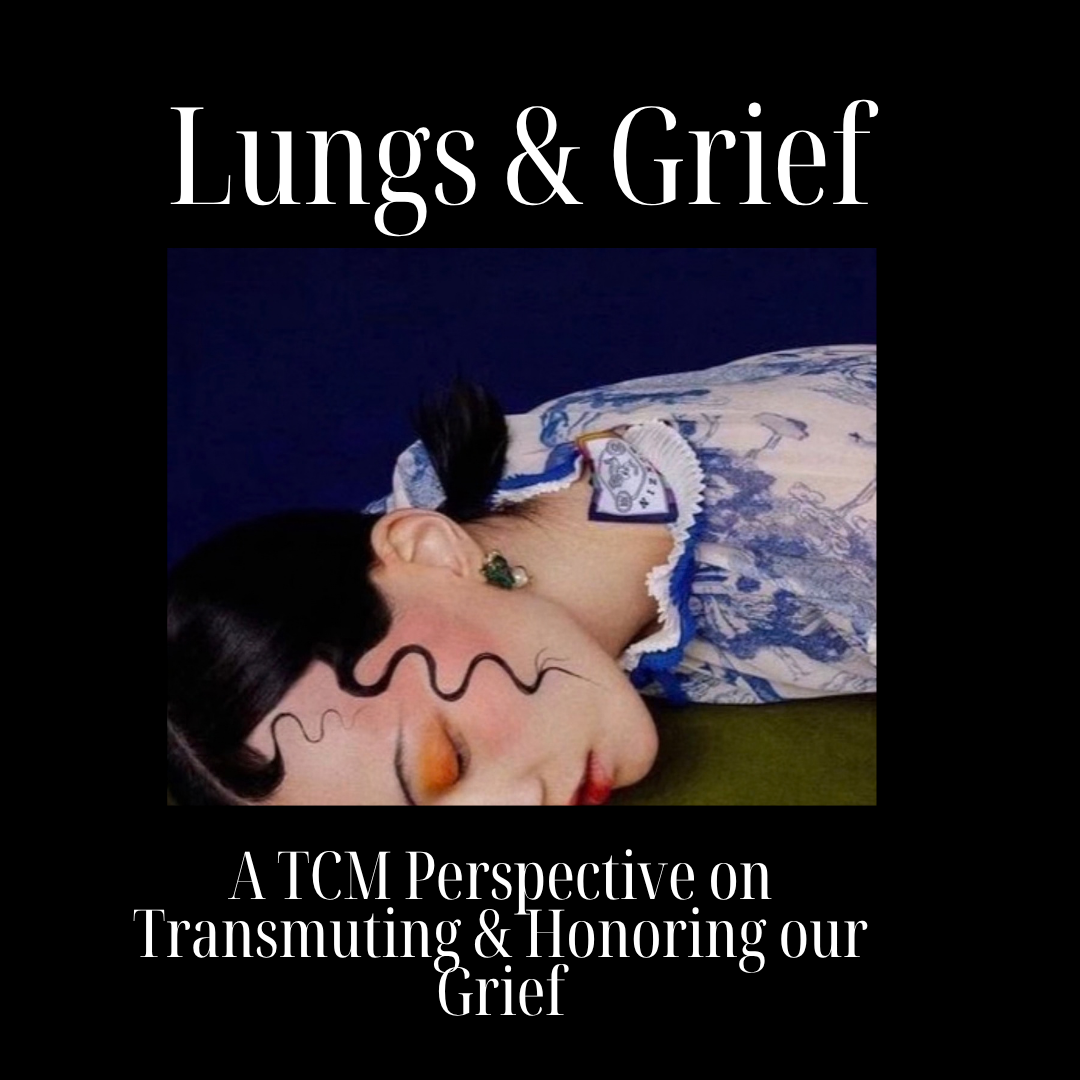
The Lungs & Grief- a TCM Perspective on Transmuting & Honoring our Grief
In Chinese medicine, autumn belongs to the Metal element and the Lungs—the organ connected with grief, breath, and our capacity to take in and let go.
The Metal element reminds us that grief is part of being human—that our capacity to love is inseparable from our capacity to mourn.
Grief is a natural and necessary path through which healing happens. When we numb out and resist discomfort it holds us in the discomfort. Pain is a messenger that something has changed and that we must change too, and as humans we are wired to adapt and change.
Grieving isn’t about how quickly we can “let go.”
But how can we allow ourselves to feel what matters to us without becoming consumed by it?
What does it mean to grieve in a time when there is so much to grieve?
Can we breathe with our sorrow?
Can we allow grief to deepen our relationship to what remains?
Can we let grief become a form of witnessing rather than something we have to overcome?
Grief & the Lungs-TCM Perspective on Transmuting Grief
The lungs are considered a tender and delicate organ, and susceptible to the climatic changes of the Fall season, and the emotions of grief.
Signs of Lung Qi deficiency:
* Chronic bronchitis
* cold and flus
* Easily getting sick
* Asthma
* Shortness of breath
* Fatigue
Grief Symptoms in the Lungs:
* Tightness in the chest
* Inability to let go of the past
* Slumped or hunched shoulders
* Feeling numb and listless
East Asian Wisdom to Transmute & Honor our Grief
Feel your feelings- Give yourself intentional, structured time to be with your feelings. Be with your feelings without having to change anything- and then give yourself space to rest and restore.
Mindful Breathing- The lungs govern our breath and our ability to receive and release. Deep diaphragmatic breathing calms our nervous system and can aid us when we are feeling deeply overwhelmed.
Journal-Writing can create a container for emotions that may feel difficult to express in other ways. Write down your thoughts, and take time to honor your grief- what you’re mourning, but also what you’re learning to carry.
Create Rituals to Release: Ritual can help us acknowledge transitions and honor what has changed. This might look like writing a letter, spending time in nature, creating a small altar, lighting a candle, moving the body, or simply sitting quietly with what is.
Choose rituals and practices that help your nervous system feel supported rather than agitating and overwhelming.
Self Massage, Acupressure, or Acupuncture: Gentle self-massage or acupressure can be a way of bringing compassionate attention back into the body. Points such as Lung 1 (LU1) and Lung 2 (LU2) on the Lung Meridian are located on the chest. Kidney points on the chest can also help with emotional regulation. Working with these areas offer a grounding practice for connecting with the breath and the sensations held in the chest.
Acupuncture can also be a supportive practice for working with the physical and emotional dimensions of grief. A qualified practitioner can personalize treatment according to your individual constitution and needs.
Making Space for What Remains
Perhaps the wisdom of the Metal element is not that we must learn to let go perfectly.
Perhaps it is that we learn to release without abandoning what we have loved.
Autumn does not ask the trees to hold onto their leaves.
It simply reminds us that there is a time to receive, a time to release, and a time to become something new.


